

Rising Phoenix Perfumery
Jade Dew - 181g Meiji Log - Golden Triangle - Ateek Agarwood - Kynam - Kyara - (Korean: 비취이슬, Kanji: 翠露, Japanese: Midori Ro, English: Jade Dew)
Jade Dew - 181g Meiji Log - Golden Triangle - Ateek Agarwood - Kynam - Kyara - (Korean: 비취이슬, Kanji: 翠露, Japanese: Midori Ro, English: Jade Dew)
Shipping & Returns Info.
Shipping & Returns Info.
Pertaining to all customers:
Our current lead time can range from 1 to 8 weeks.
Special requests can be made in the "notes" section on the checkout page.
All orders are final. There are no cancellations or returns.
Reach out the the RPP team as soon as possible if you need to make changes to your order.
International customers: The RPP team highly recommends shipping with a private courier for accurate tracking information and timeliness.
Couldn't load pickup availability
Jade Dew - 181g Meiji Log - Golden Triangle - Ateek Agarwood - Kynam - Kyara
(Korean: 비취이슬, Kanji: 翠露, Japanese: Midori Ro, English: Jade Dew)
Jungle : Golden Triangle (more below)
Class : Old Samurai Kodo Family Heirloom
Grade : Collector's Grade, Kynam / Kyara-like
Species : Sinensis? Crassna?
—Taesik Review
"A while ago, JK sent me a few pictures of beautifully resinated large pieces of agarwood. The story he told me about how he found these woods was fascinating. The owner discovered these woods inside a wooden box inherited from their ancestors, along with late Edo/early Meiji period kimono fabric. Hence the name for these woods was determined, "Meiji Log".
But you can hear more about the backstory from JK. In this review, I'll focus on their scent.
📌 This review is on a small pieces from the outer layer of 181g log.
The scent that wafted into my nose when I first unscrewed the cap immediately gave me a sense that I was experiencing something very special. Even at room temperature, it smelled strongly captivating, as if I were already smelling it on a heater.
When gently heatad, it gives off nuances of Grape, Mango, Cantalope, Apricot, and White Florals. Interestingly, this fragrance induces a meditative state and gives me a feeling of solitude in the quiet early morning.
I feel immensely grateful for JK to share this treasure with me, and I hope you get the opportunity to experience the beauty of this wood for yourself.
Luckily, JK acquired enough of these materials to share with as many people as possible. You don’t need a whole lot because it’s very fragrant at room temperature, and need a very little to have a session.
This agarwood is one that I’ll cherish for a long time. and I believe you’ll feel the same once you experience it."
ABOUT
This particular log is of unusual provinance, as it came from an old tea family in Japan.
The family used to be a prominent family of practitioners that catered to Samurai families in centuries past. Although the family no longer practices Kodo - they still do grow tea, and their teas have a very small circulation amongst elite Matcha drinkers.
This particular log was discovered in an old old box of family heirlooms, and was wrapped in a piece of kimono fabric with a pattern dating to the late Edo (1603 - 1868) / early Meiji Era (1868 - 1912).
So although this piece was likely wrapped and placed in the box in the 1860's given the dating of the kimono pattern - the wood is likely a century or two older than the cloth in which it was wrapped. But for argument's sake - I call it the Meiji Log, as we know that it is at least as old as the youngest dating of the fabric, for certain.
Something else that is really interesting about this log ... no one can place exactly where it's from. Several customers have had the opportunity to try some, and they each have a different opinion ! Some have thought it's Northern Vietnamese. Other's have thought Cambodia or even Thailand. This is all good news, btw.
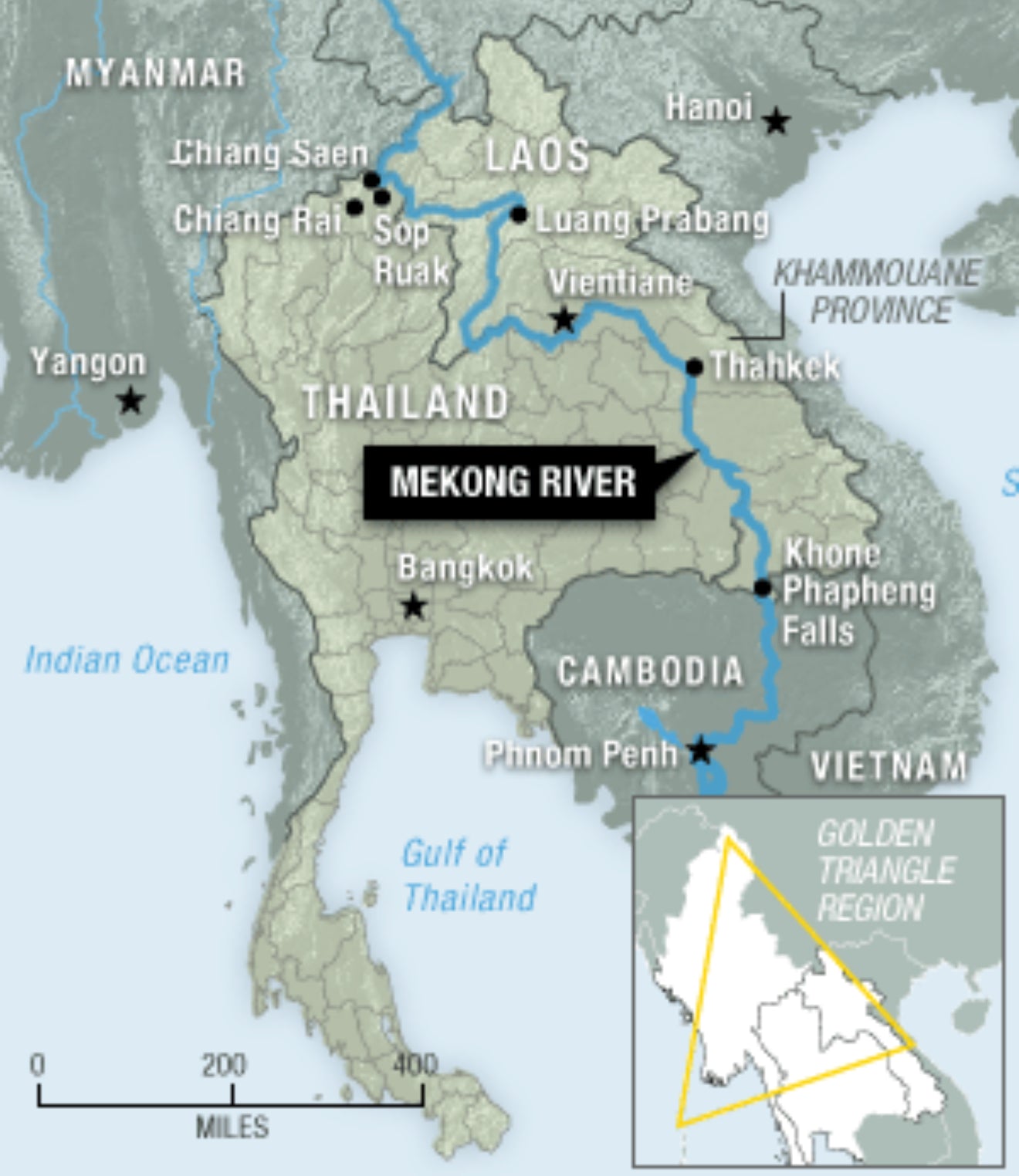
To my nose - I find this more in line with old old samples of so-called "Golden Triangle" woods, which includes Northern Thailand, Eastern Myanmar / Burma, Northern Laos, and Yunnan. "Golden Triangle" is usually a specific profile - and the country of origin means less than the scent profile, itself. Especially in Japanese classifications of woods. Not only is it a highly prized geographical region - but this specific profile is sought after in some circles more than Kyara.
Personally - I think this lines up with some woods I've seen from the area of intersection between Laos, Eastern Burma, and Yunnan.
But, as I said - the specifics of geolocation matter less than the experience of the scent - and this is one hell of an experience you wont find anywhere else !
CONTINUED
One last thing I'd like to mention is the appearance of the wood, itself.
To the naked eye, it looks to be a very dark cherry or black color of resin.
Under magnification, you can see that all the resin ducts are just filled to the brim with glistening resin.
But it's not until it is highly magnified that you can see the Golden White / Yellow content of OIL that makes the wood look more like Kynam / Kyara. The scent hints at it, but to the naked eye it looks jet black. You can see this in some of the photos and videos I posted that a customer sent me (enjoy his commentary!), and from the cross sections - the wood looks almost kaleidoscopic with multicolored rainbowy resin.
**See the listing photos and videos to get a better look at what I'm referring to.
Share